
Gullah Geechee culture is woven into Charleston's history, language, foodways, art and traditions, but it is not simply something visitors come to observe. It is a living culture sustained by communities across the Lowcountry and the broader coastal Southeast.
For visitors to Charleston, understanding that distinction is a good place to start. This guide explains the history, introduces places where you can learn more, and offers practical ways to engage with Gullah Geechee culture respectfully.
What Gullah Geechee Culture Actually Is
Gullah Geechee people are descendants of enslaved Africans brought to the Lowcountry of South Carolina and Georgia, many from the rice-growing regions of West and Central Africa.
Gullah Geechee culture developed among African and African American communities across the coastal Southeast. Geographic isolation on coastal plantations, Sea Islands and barrier islands helped some African traditions endure, while people from different West and Central African backgrounds also created new cultural practices in the Lowcountry. Those influences remain visible in language, foodways, basketry, storytelling, music, spiritual traditions and other forms of community life. Gullah Geechee culture continues today and is not limited to historic sites or museum interpretation.
Congress recognized the significance of this heritage in 2006 by designating the Gullah Geechee Cultural Heritage Corridor, which extends through coastal areas of North Carolina, South Carolina, Georgia and Florida. You can learn more from the National Park Service's Gullah Geechee Corridor page. Today, preservation also means protecting the communities, land, language and cultural practices that allow those traditions to continue.
Start at the International African American Museum
If you have limited time, start here, because it gives everything else context.
The International African American Museum sits at 14 Wharfside Street, on the site of Gadsden's Wharf, where tens of thousands of enslaved Africans first landed. Charleston was one of the most significant ports in the North American slave trade. The International African American Museum states that over 40% of captive Africans brought to North America entered through Charleston. That location is not incidental. The museum was built on that exact ground on purpose.
Inside, a dedicated Gullah Geechee Gallery explores the community's history, cultural practices and contemporary issues through exhibits that include a full-size bateau, a recreated praise house and multimedia experiences. Plan for about 90 minutes to two hours. It's currently open Tuesday through Sunday and closed Mondays, so check the museum's current hours before you go. The outdoor African Ancestors Memorial Garden is worth lingering in too.
If you only have a few hours: Start with the museum for historical and contemporary context, then visit the City Market to see the sweetgrass basket tradition in a living commercial setting. With a half day or more, McLeod Plantation adds deeper context about enslavement, emancipation and Gullah Geechee life on James Island.
The Sweetgrass Baskets at the City Market
You'll see them the moment you walk into the City Market, and they deserve more than a passing glance.
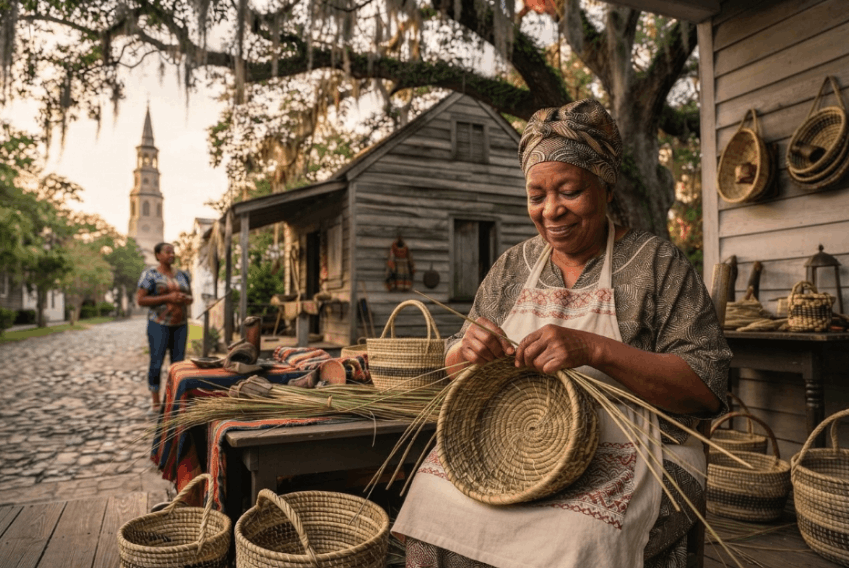
Sweetgrass basket weaving is one of the oldest African art forms practiced in the United States, carried here across generations. The technique traces back to West Africa, and the City Market reports more than 50 resident Gullah artisans. The coiled baskets aren't souvenirs in the ordinary sense. Each is individually handmade, and the prices reflect genuine craftsmanship rather than mass production.
If you decide to buy a basket, purchasing directly from a Gullah artisan supports the maker and the continuation of the craft. Be respectful of the artisan's time, and ask before photographing either the person or their work.
Taste It: Gullah and Lowcountry Food
Gullah Geechee foodways have deeply influenced Lowcountry cooking. Rice, okra, seafood and other ingredients connect many regional dishes to African and African American culinary traditions, although not every dish now associated with Charleston is exclusively Gullah Geechee.
For visitors who want a specific place to explore that connection, Hannibal's Kitchen at 16 Blake Street describes its cooking as "Soul Food-Geechee Style" and has been operated by the Huger family since 1985. Its signature shrimp and crab rice is one of the dishes the restaurant itself highlights.
Go Deeper: McLeod Plantation
To understand Gullah Geechee history honestly, it helps to stand where the labor happened.
McLeod Plantation Historic Site on James Island is a 37-acre Gullah Geechee heritage site that interprets the lives and labor of people who were enslaved there and the experiences of their descendants after emancipation. Historic structures include homes where enslaved families and later their free descendants lived. It's a short drive from downtown and a very different experience from the garden-focused plantation tours.
If you book a cultural tour, look for tours that identify their Gullah Geechee guides, ownership or community connections clearly. That gives you a better basis for choosing an experience led by people connected to the culture being interpreted.
How to Experience Gullah Geechee Culture Respectfully
A few simple things make the difference between visiting and intruding:
- Buy directly from Gullah artisans when you can, and look for cultural tours that clearly identify their Gullah Geechee guides, ownership or community connections. This gives you a better basis for choosing experiences connected to the people whose culture is being interpreted.
- Ask before photographing people, especially at churches, markets, or cultural events. A basket stall is someone's livelihood, not a photo backdrop.
- Respect the meaning of historic and sacred places. Burial grounds, praise houses, historic communities and sites associated with enslavement deserve the same care you would bring to any place shaped by living memory, worship or loss.
- Listen more than you narrate. The best cultural experiences here come from hearing the story firsthand.
The principle is simple: approach these places, traditions and conversations as a guest, with respect for the people whose history and culture they represent.
Frequently Asked Questions
Gullah Geechee culture is the distinct African American culture of the Lowcountry coast, developed by descendants of enslaved Africans who preserved and adapted their own language, food, crafts, and spiritual traditions. It remains a living culture today, not just a historical one.
Start at the International African American Museum, then visit the sweetgrass basket makers at the City Market. Hannibal's Kitchen is one place to explore food the restaurant describes as "Soul Food-Geechee Style," while McLeod Plantation or a clearly identified Gullah Geechee-led cultural tour can add deeper historical context.
Sweetgrass baskets are coiled baskets made by Gullah artisans using traditional techniques and Lowcountry plant materials such as sweetgrass, bulrush and palmetto. The craft has deep West African roots and has been practiced in the Charleston area for generations.
Yes. Gullah is an English-based Creole language shaped by African linguistic influences and developed within Gullah Geechee communities. It remains a living language today.
It's a federally designated corridor running along the coast from North Carolina to Florida, recognizing the Gullah Geechee people and their contributions. It was designated by Congress in 2006.
Plan Your Charleston Cultural Stay
Charleston's Gullah Geechee heritage rewards visitors who slow down and pay attention, and a downtown base makes it easy to reach the museums, markets, and neighborhoods that anchor a trip like this. If you'd like a quiet, well-placed home for that kind of visit, we'd love to host you. You can explore our suites or check availability for your dates.