


Stand at the corner of Broad and Meeting for a minute before you do anything else. Four institutions meet at that intersection, locals call it the Four Corners of Law, and it tells you exactly what kind of place you've walked into. The Charleston Historic District rewards people who slow down and read it, not people who race through a checklist.
Trying to cover every landmark in a single afternoon can turn an otherwise enjoyable walk into a checklist. This guide is the opposite of that. Here's how the district is laid out, where to start, what's worth your time, and what you can skip without regret.
What "the Historic District" Actually Means
Charleston uses several overlapping historic-designation boundaries, which is why the term can be confusing.
The city established its first historic zoning protections and Board of Architectural Review in 1931. The Charleston Historic District was then designated a National Historic Landmark in 1960 and entered into the National Register of Historic Places in 1966, and those boundaries have expanded over the years since. For a first-time visitor, you don't need to memorize the legal lines. What matters is that much of the lower peninsula is a protected, living historic environment rather than a purpose-built attraction. You can read the framework behind that on the City of Charleston's Board of Architectural Review page if the designation history interests you.
Where to Start: The City Market End
Begin at the north end and walk south. It's the natural flow, and it saves the best waterfront view for last.
The Charleston City Market runs four blocks off Meeting Street, and it's the logical starting point for a first visit. The Day Market currently operates daily, while a separate Night Market runs Friday and Saturday evenings, so check the official market schedule before planning around either. The market is also an important place to encounter Charleston's Gullah sweetgrass-basket tradition, a craft of West African origin carried across generations, with dozens of resident Gullah artisans represented there.
From the market, you're a short walk from the French Quarter's galleries and the quiet cobblestone stretch of Chalmers Street. Duck down the side streets here. The main drags get the foot traffic, but Charleston's character lives in the alleys.
The Must-See Stretch: East Bay to the Battery
This is the walk most people come for, and it earns the reputation.
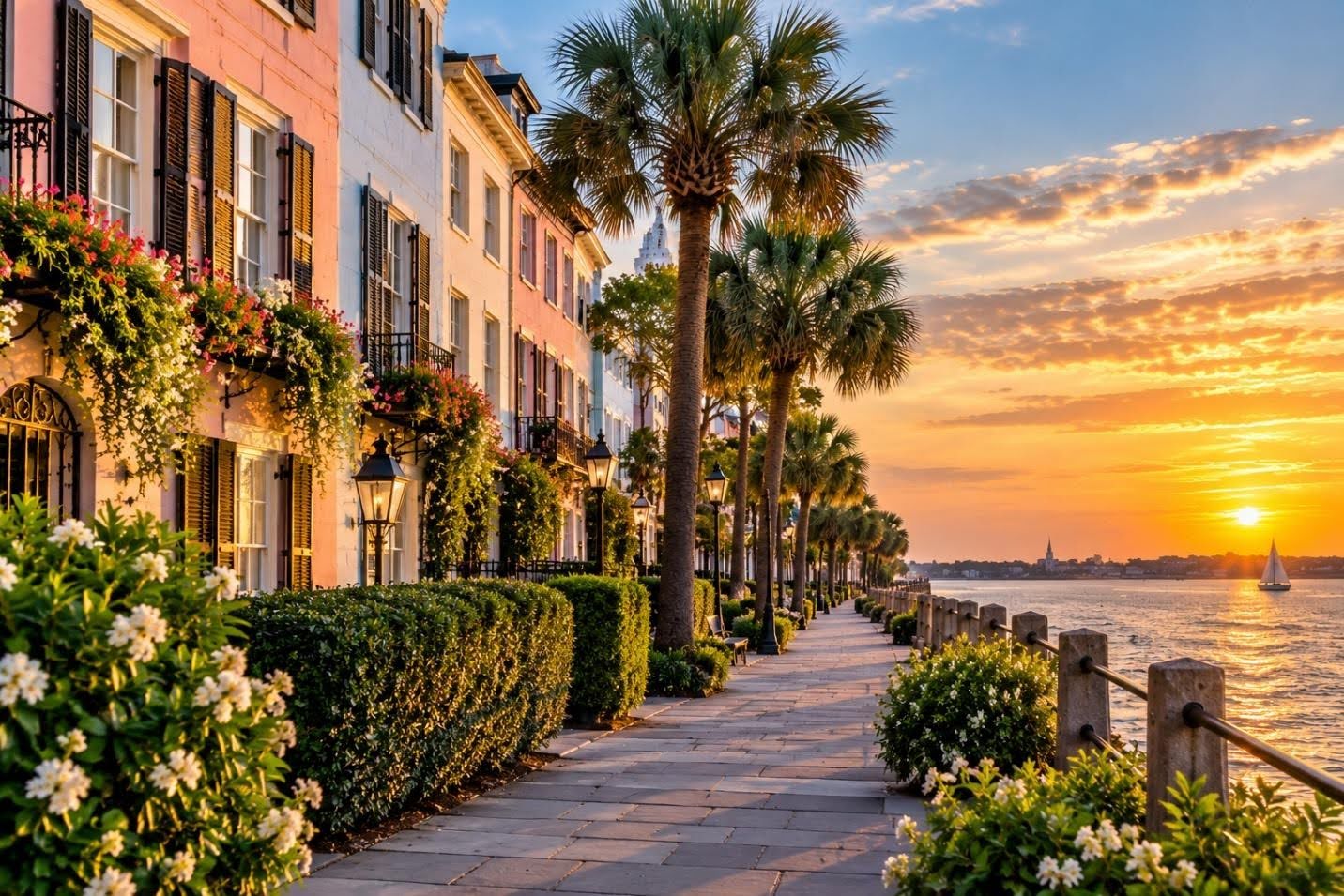
Head down toward East Bay Street to find Rainbow Row, the historic row of thirteen pastel houses at 83–107 East Bay Street. They're private homes, so photograph them from the sidewalk and keep the entrances clear. If photography matters to you, earlier in the day can be a more comfortable time to stop before continuing south.
Keep walking, and the street opens up at the Battery, where the Ashley and Cooper rivers meet. Continue toward the High Battery, the elevated historic promenade along East Battery overlooking Charleston Harbor, with antebellum mansions on one side and the water on the other. At the tip sits White Point Garden, with its live oaks and old cannons. The Battery is especially worthwhile around sunset, when the harbor becomes part of the walk rather than just the backdrop.
Here's the pacing note: the Battery is a proper walk from most of the peninsula. Plan to do it once, on the day you've set aside for the south end, and grab a rideshare or pedicab back rather than doubling the distance on tired feet.
What to Skip on Your First Pass
Not everything needs to happen on day one. A few things worth deprioritizing:
- Trying to see every house museum. Choose one if historic interiors interest you, like the Nathaniel Russell House, and save the rest.
- Backtracking across the peninsula. Group the Market and French Quarter together, then continue south toward Rainbow Row and the Battery in one direction.
- Treating every cobblestone street as a photo stop. Some are residential access routes, so keep doorways, driveways, and sidewalks clear.
None of this is about doing less. It's about not spending your first afternoon rushing past things you could enjoy properly.
Self-Guided vs. a Paid Tour
You can absolutely walk the Historic District on your own, and for a first orientation, I'd argue you should. Free and self-paced beats a rushed loop.
Where a paid tour earns its keep is depth. A good walking guide explains why the single houses turn their narrow end to the street, why the piazzas face south to catch the breeze, and what you'd never notice on your own. The approach that works best: walk it yourself on day one to get the lay of the land, then book one focused walking tour, a house museum, or a Gullah history tour for the context. For a broader list of what's around the peninsula, our Charleston experiences guide rounds up the sights worth your time.
How Long Do You Need?
For a first pass, give the district a half day. A relaxed morning from the City Market down to the Battery, with coffee and photo stops, runs about three to four hours at a human pace.
Charleston is walkable, but some historic sidewalks and streets are brick, cobblestone, or uneven, so route choice matters if anyone in your group uses a mobility aid or finds rough surfaces difficult.
If you have a second day, that's when the district really opens up: a house museum, a slow hour in the French Quarter galleries, a walk through the churchyards. The Holy City earned that nickname from its skyline of steeples, and St. Michael's at Broad and Meeting has stood since the 1750s. For a fuller plan that builds on this orientation, our 48-hour Charleston itinerary lays out two days from downtown.
Frequently Asked Questions
Start at the City Market end and walk south toward the Battery. It follows the natural layout of the peninsula and saves the best waterfront views for the end of your walk.
Yes. Much of Charleston's historic peninsula is highly walkable, and the route between the City Market and the Battery is manageable on foot for many visitors. Comfortable shoes help, and note that some streets are brick or cobblestone.
Give it a half day for a first visit, roughly three to four hours at a relaxed pace from the City Market to the Battery. With a second day, add a house museum and the French Quarter galleries.
Rainbow Row on East Bay Street, the Battery seawall and White Point Garden, the City Market, and the quiet side streets of the French Quarter. Many of the best things, including all the walking, are free.
No. It's easy to explore on your own, and self-guided is the best way to get oriented first. A paid walking tour or house museum is worth adding afterward if you want deeper historical context.
Plan Your Charleston Stay Around the History
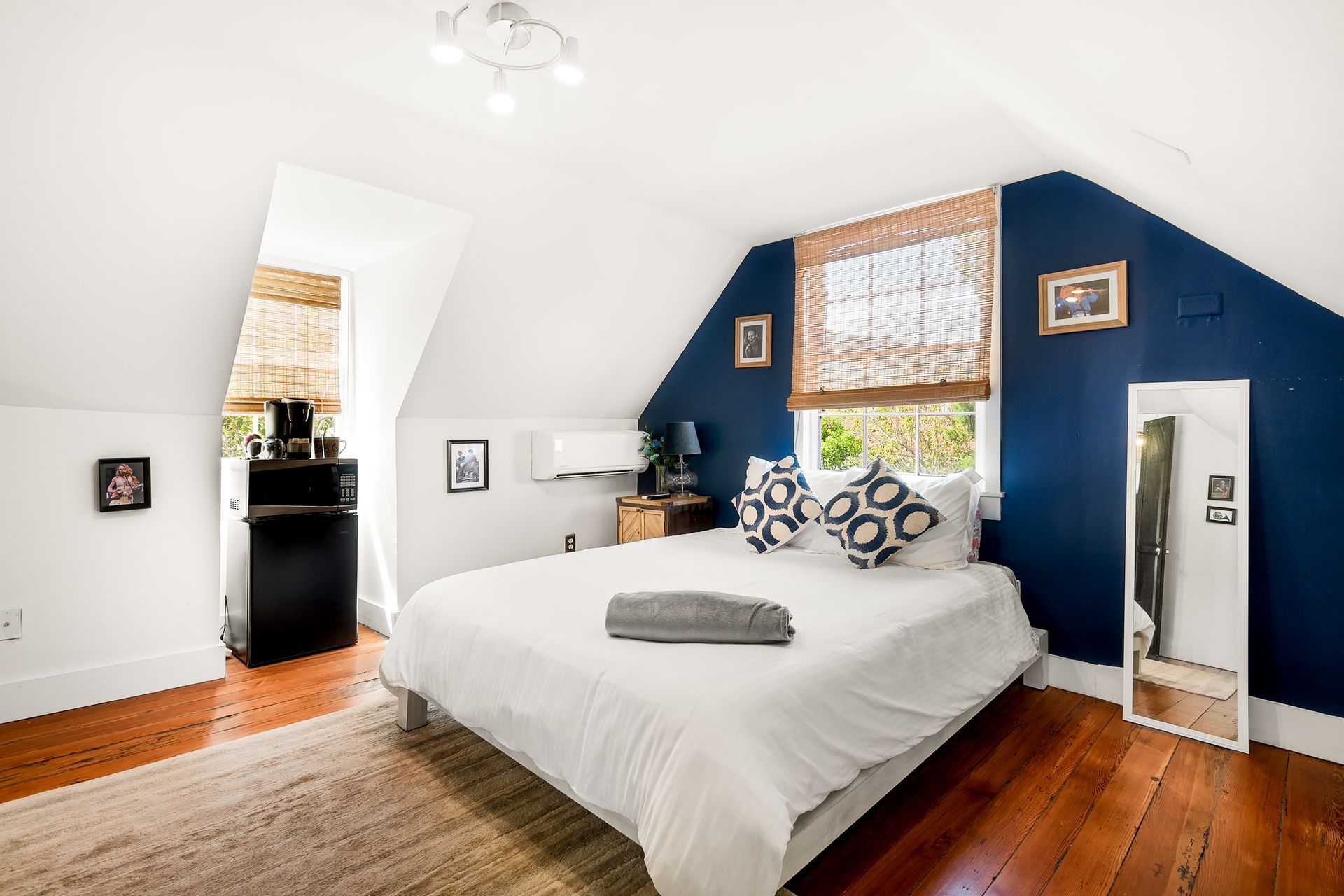
The Historic District is best in unhurried pieces, and where you stay decides how easily you can dip in and out of it. If you'd like a quiet, walkable base near the top of the peninsula, we'd love to host you. You can explore our suites or check availability for your dates.